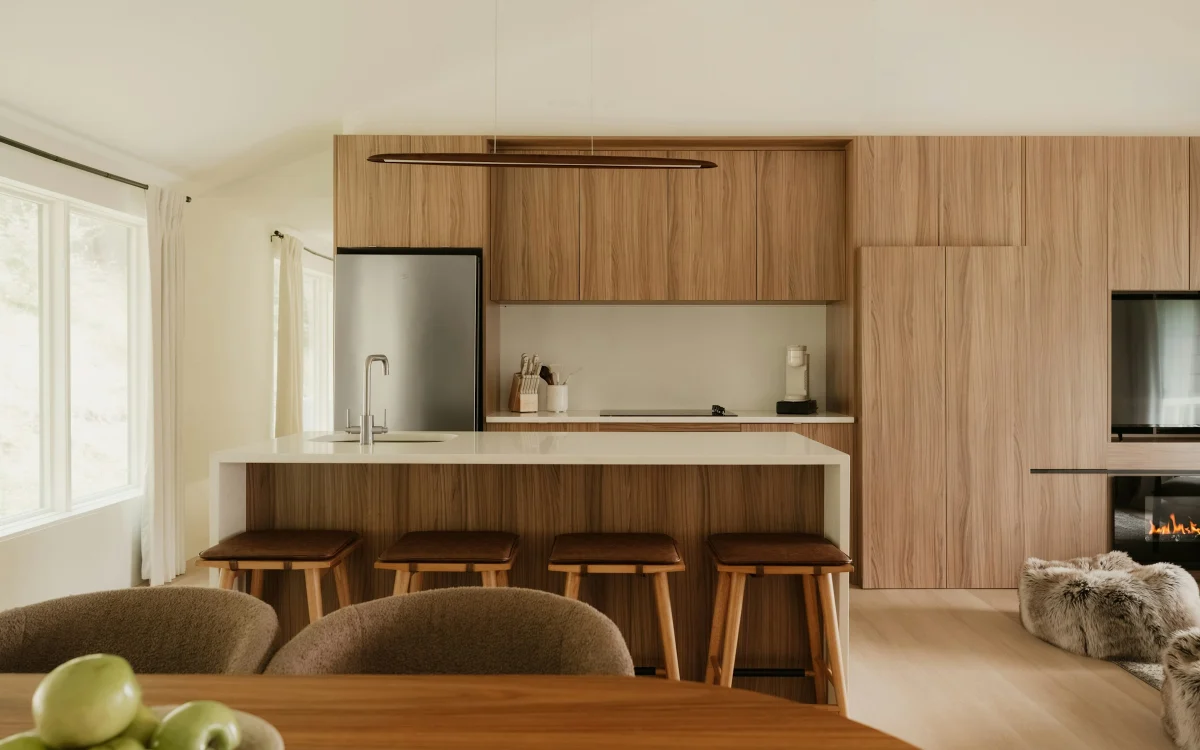
The first meeting goes faster, and the design fits better, when you have thought about a few things beforehand. You do not need drawings or pictures. You need honest answers.
Start with how you live, not how it should look
Who lives in the house, and who visits often? Where do you eat on an ordinary Tuesday? Where do coats, bags and shoes end up? A plan built on these answers works for years. A plan built on a magazine photo works until the first busy week.
Write down what stays
Furniture you love, a piano, a radiator you cannot move, a wall you are not allowed to touch. Every fixed point changes the plan, so it is better to know about it on day one.
- Pieces of furniture that stay, with rough sizes.
- Anything that cannot move: pipes, radiators, load-bearing walls.
- Rooms you need to use while the work is going on.
Say the budget out loud
It feels awkward, but a designer without a budget is guessing. Give a range and say what it covers, building work, furniture or both. We will tell you early if the plan and the budget do not match.
Bring what you already have
Old floor plans, photos of the rooms, a list of things that annoy you. Ten minutes of preparation saves an hour of the first visit.