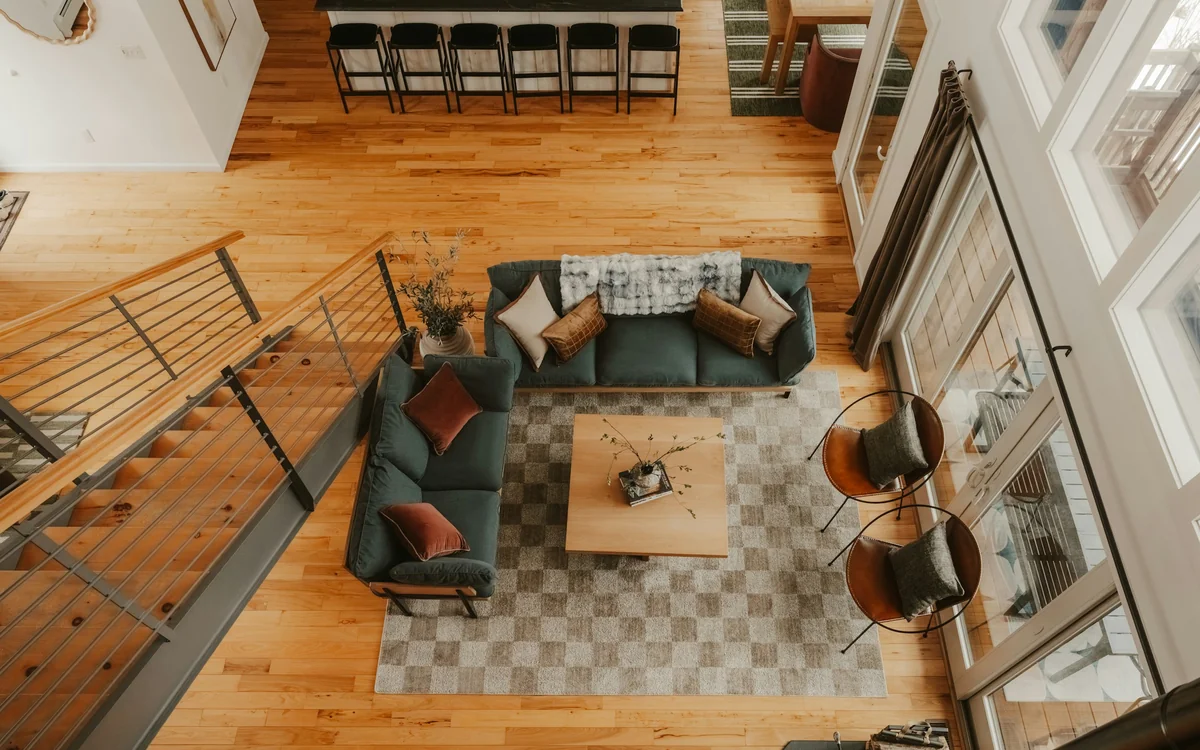
Furniture looks smaller in a showroom than it does at home. Before ordering, we draw the main pieces to scale and check how the room works on an ordinary day.
Measure the space you actually use
Record door swings, radiators and the height of windowsills as well as the walls. A cabinet may fit a wall perfectly but block the door beside it. Include the space a drawer needs when it is open.
Mark out the large pieces
Use paper or tape to mark the sofa, table and rug on the floor. Walk between them with a tray or a laundry basket. If the route feels awkward now, moving the same pieces into the room will not improve it.
- Leave a clear route between the doors.
- Check chairs can pull back from the table.
- Keep lamps close to a usable socket.
Mix the heights
A room filled with low pieces can feel unfinished; a row of tall cabinets can feel heavy. A floor lamp, one taller cupboard and lower seating often give a more comfortable balance.
Order in stages
Choose the pieces that set the layout first. Live with them before buying every side table and accessory. The final shopping list should support the room you use, rather than fill every corner.